
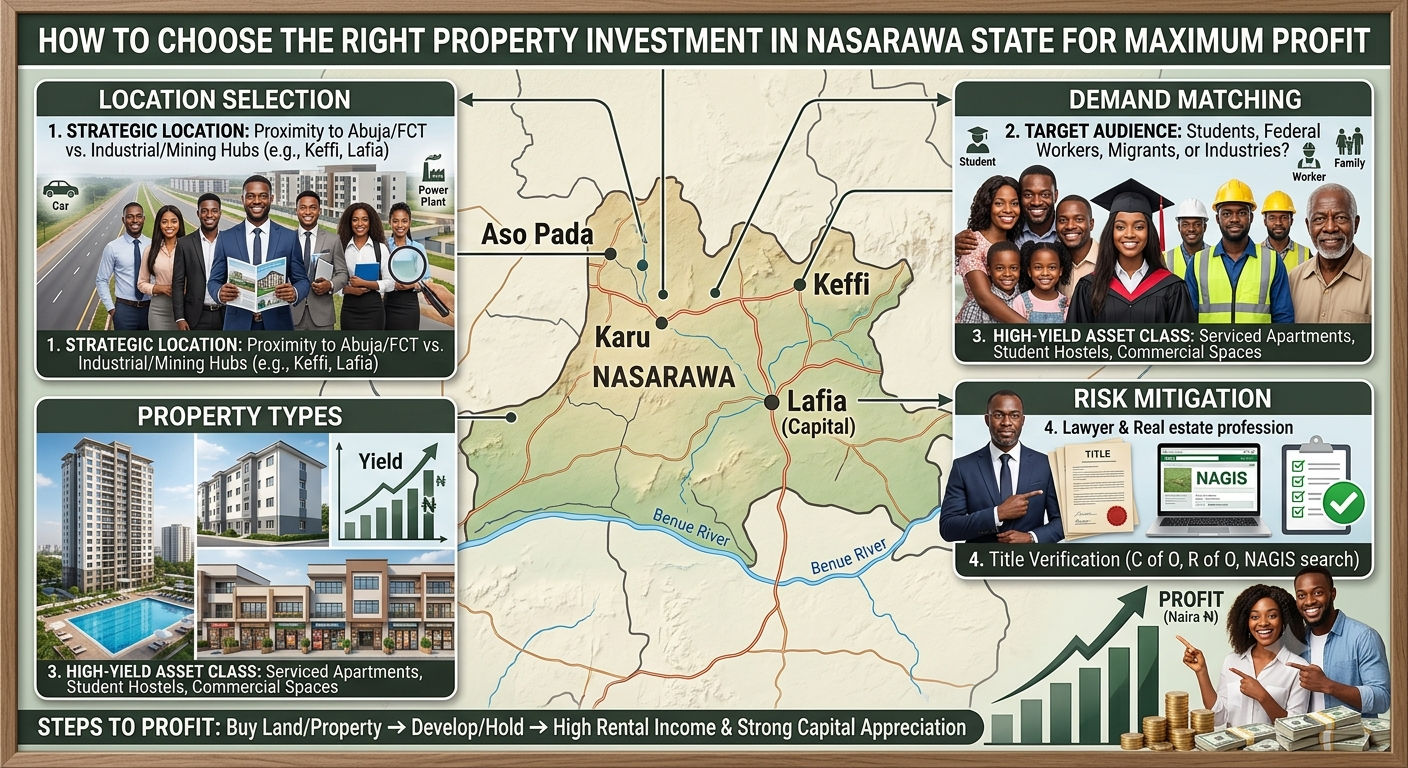
Why Property Investment in Nasarawa State Is Gaining Attention
Nasarawa State has steadily emerged as one of Nigeria's fastest-growing destinations for property investment. Its proximity to the Federal Capital Territory (FCT), Abuja, expanding road networks, growing population, and increasing business activities have contributed to rising demand for both residential and commercial properties.
As more people relocate to the state for affordable housing, employment opportunities, education, and business, the real estate sector continues to expand. This growth has attracted investors looking for long-term capital appreciation and stable rental income.
However, not every type of property investment delivers the same level of return. Before investing, it is important to understand the different property categories, current market demand, your available budget, and your long-term financial goals.
This guide explains the major property investment opportunities in Nasarawa State and the factors investors should consider before making a decision.
Why Real Estate Remains a Strong Investment
Unlike many assets that fluctuate significantly over time, real estate generally appreciates in value over the long term, especially in developing locations experiencing rapid urbanization.
Several factors continue to support the property market in Nasarawa State, including:
- Population growth
- Expansion of residential estates
- Increasing commercial activities
- Improved road infrastructure
- Demand from workers living outside Abuja
- Rising housing needs among families and young professionals
These factors continue to create opportunities for investors seeking either rental income or long-term capital growth.
Which Property Investment Is Right for You?
There is no single investment that suits everyone. The best choice depends on your financial capacity, investment timeline, and expected returns.
Some of the most common property investments in Nasarawa State include:
- Land
- Rental houses
- Short-let apartments
- Hotels and hospitality properties
Each investment option has its own advantages and challenges.
1. Land Investment
Land remains one of the most popular real estate investments in Nasarawa State.
As development spreads across different towns and communities, many individuals are purchasing land either to build homes, establish businesses, or hold as long-term investments.
Because land is limited while population continues to grow, demand often increases over time, which can lead to appreciation in value.
Why many investors choose land
Land investment offers several potential benefits:
- Lower maintenance costs compared to buildings
- Opportunity for long-term appreciation
- Flexible future use
- Can be developed later when finances improve
- Suitable for both individual and institutional investors
Many buyers also purchase land simply to preserve wealth, expecting prices to rise as surrounding areas develop.
What investors should consider
Although land can be profitable, investors should conduct proper verification before making any purchase.
Important checks include:
- Ownership documents
- Government approvals where applicable
- Boundary verification
- Existing disputes
- Accessibility
Future development plans in the area
Buying land without proper due diligence can expose investors to legal disputes or ownership challenges.
2. Rental Houses
Constructing or purchasing residential houses for rent is another common investment strategy in Nasarawa State.
The growing number of workers, students, civil servants, traders, and families relocating into the state continues to create demand for rental accommodation.
Rental properties provide investors with recurring income while the property's market value may also appreciate over time.
Advantages of rental properties
Some benefits include:
- Monthly or yearly rental income
- Long-term asset appreciation
- Relatively stable demand in developing communities
- Opportunity to expand into multiple properties
Well-maintained houses located near major roads, schools, hospitals, markets, or business districts often attract tenants more easily.
Challenges
Rental property ownership also comes with responsibilities such as:
- Property maintenance
- Repairs
- Tenant management
- Vacancies between tenants
- Property taxes and other operational expenses where applicable
Investors should include these costs when estimating expected returns.
3. Short-Let Apartments
Short-let apartments have become increasingly popular across many Nigerian cities, and interest in this investment model is gradually expanding into parts of Nasarawa State.
Rather than renting properties on yearly agreements, owners lease furnished apartments for shorter periods ranging from a few days to several weeks.
Typical customers include:
- Business travelers
- Tourists
- Visiting families
- Contractors
- Event attendees
- Professionals on temporary assignments
Potential advantages
Short-let apartments may generate higher income per day than traditional yearly rentals when occupancy remains strong.
Other advantages include:
- Flexible pricing
- Better control over property usage
- Opportunity to adjust rates during peak demand
- Attractive to visitors seeking hotel alternatives
Things to consider
Operating short-let apartments usually requires more active management.
Owners may need to provide:
- Furnished rooms
- Internet access
- Regular cleaning
- Security
- Utility management
- Customer support
Success often depends on location, quality of service, and consistent occupancy.
4. Hotels and Hospitality Investment
Hotel investment represents one of the largest property investments in terms of capital requirements.
As business activities increase across Nasarawa State, demand for accommodation from visitors, conference participants, contractors, and government officials may create opportunities within the hospitality industry.
Hotels generate revenue from:
- Room bookings
- Conference facilities
- Restaurants
- Event hosting
- Additional guest services
Advantages
A well-managed hotel can create multiple income streams while supporting local employment and tourism.
Challenges
Hotel investments generally require:
- Significant startup capital
- Professional management
- Marketing
- Regular maintenance
- Staffing
- Compliance with applicable regulations
Because operational costs are relatively high, investors should conduct detailed feasibility studies before entering the hospitality sector.
Factors to Consider Before Buying Property
Regardless of the investment type, buyers should carefully evaluate several important factors.
Location
Location remains one of the strongest determinants of property value.
Areas experiencing infrastructure development, commercial expansion, and population growth often record stronger property demand.
Budget
Investors should choose projects that match their financial capacity without overextending themselves.
It is also advisable to set aside funds for documentation, maintenance, and unexpected expenses.
Investment Goal
Some investors prioritize long-term appreciation, while others focus on generating regular cash flow.
Clearly identifying your objective helps determine the most suitable investment.
Legal Verification
Property documents should always be carefully verified before making payment.
Proper documentation helps reduce the risk of ownership disputes and protects the investor's interests.
Future Development
Researching planned road projects, commercial developments, educational institutions, and industrial growth can provide useful insight into an area's future investment potential.
Why This Matters
The property market plays an important role in economic development by creating employment, encouraging construction activities, supporting businesses, and increasing access to housing.
For individual investors, selecting the right property can contribute to long-term financial stability and wealth creation. However, successful investment requires careful planning rather than relying solely on rising property prices.
Market conditions, location, infrastructure, and legal documentation all influence the profitability of a real estate investment.
Nasarawa State continues to attract attention as one of Nigeria's growing real estate markets. Increasing urban development, population growth, and its strategic location near Abuja have created opportunities across several property categories, including land, rental housing, short-let apartments, and hotels.
Each investment option offers different benefits and risks. Land may provide long-term appreciation, rental houses can generate recurring income, short-let apartments may offer higher returns where demand exists, while hotels can create multiple revenue streams but require greater capital and management.